From France to Germany
The trip I had planned from France to Germany included Paris, Brussels, Amsterdam, Prague, and several cities in Germany (Leipzig, Berlin, and Munich).
I designed the itinerary this way to make the round-trip airfare more affordable, since Mahan Air allowed me to fly into Paris and return from Munich. Returning from Milan or Barcelona was also an option, but I’ll save those for another trip.
My visa was issued by France, so I had to enter through Paris.
I preferred to travel between cities by train, although I also took some flights and buses.
I spent four nights in Paris, one in Brussels, two in Amsterdam, two in Prague, and seven in Germany.
Travel agencies don’t usually offer itineraries like this. Even when they do, the price and quality generally don’t compare favorably with what you can arrange yourself, unless you’re booking a private tour.
If you’ve never traveled abroad and don’t have much travel experience, I suggest taking a tour for your first few trips before attempting this kind of journey on your own.
But if you’re ready for an adventure like this, the following guide should be useful.
What should you pack?
This is the first question to ask yourself, because you’ll constantly be getting on and off trains, buses, and subways and moving from one city to another. Forget about bringing a large suitcase. I’d recommend a small carry-on suitcase along with a waist bag or backpack. If a camera and laptop are essential, choose a backpack that fits both.
Your suitcase will be your main headache. Even if it’s small, carrying it up stairs at subway stations or anywhere without an elevator or escalator can be difficult.
If you don’t mind carrying a heavy backpack, a travel backpack can hold everything and make getting around easier. Its major drawback is that it has no wheels. Carrying it through airports or over long distances can get tiring.
So if you find a combination of the two, buy it. (Deuter and Kathmandu have made bags like this.) I mean a backpack with wheels underneath. It doesn’t need a telescoping handle: the bag itself is tall enough, and a handle would probably dig into your back.
Once you’ve picked your backpack or suitcase, choose what goes inside carefully. Packing too many clothes only adds unnecessary weight.
Choose your clothing based on the season and weather.
Here’s what I chose for an autumn or winter trip:
- Two wrinkle-resistant T-shirts that are easy to wash and don’t need ironing
- Two pairs of wrinkle-resistant trousers, one also windproof and waterproof
- A raincoat
- Base layers, both tops and bottoms
- A warm jacket
- Regular and warm socks
- One pair of shorts; one is enough
- One long-sleeved shirt that isn’t too warm
- A warm hat
- A scarf, as the wind can be bothersome
- Comfortable walking shoes with enough grip for snow and ice
Don’t pack more clothing than this. You can wash and dry most things, or buy something locally if you need it.
Make sure to bring wet wipes, lip balm, deodorant, perfume, any medication you regularly take, and remedies for headaches, colds, diarrhea, nausea, and stomach problems. Avoid bringing codeine-containing pills, sleeping pills, or other prescription-only medicines without checking the rules first.
Other useful items include a power bank, neck pillow, headphones, and a spare mobile phone.
If you have a credit card, you can book hotels on Booking.com. You can also use TripAdvisor and Booking.com to choose your accommodation, then make reservations through Iranian travel websites such as Berim Safar.
Pay close attention to whether your room is private, whether you’re booking a hostel or hotel, whether rooms are separated by gender, whether the bathroom is private, and whether breakfast and Wi-Fi are included.
Being close to a metro or bus station is especially important. Otherwise, you’ll either spend extra money on taxis or have a long walk.
Try to book accommodation that doesn’t require advance payment and allows free cancellation until a few days before arrival.
Breakfast usually isn’t included in the price at many three- and four-star European hotels. I wouldn’t add it, because there are plenty of interesting places to have breakfast outside.
A few airport tips
-
If you’re connecting to another flight, pay close attention to the departure time. If you’re short on time, don’t just wait in line: go forward and tell the staff you have a flight to catch. (I’ve missed several flights because of this!)
-
Check your entry stamp. Your passport should be stamped when required. (During this trip, I entered without a stamp because of a bus driver’s mistake. If I hadn’t followed up and obtained the stamp myself, it could have caused serious trouble.)
-
Some airports have long transfer routes. Don’t waste time shopping, browsing stores, or eating before reaching the departure gate. If you have lots of time, be careful not to fall asleep. (Once I got distracted by food and missed a flight too!)
-
Keep in mind that departure gates at European airports may close around half an hour before takeoff, and once they’re closed you may not be allowed through. Don’t assume an aircraft will wait just because you’ve already passed security. (At an airport in Finland, I reached the departure gate fifteen minutes before takeoff and wasn’t allowed to board. The plane left without me.)
-
Never put your laptop, camera, power bank, phone, or other valuables in checked baggage. Also check which items are prohibited in your destination country.
-
Don’t take knives or camping equipment into the aircraft cabin. You may be stopped or asked to surrender them. (Once, a knife cost me an hour at the airport.)
-
Always keep your passport and money securely attached to you, for example in a sturdy waist pouch or neck wallet.
Paris
After arriving at the airport, completing the formalities, and exiting the gate, it’s time to get to your hotel.
First, take the airport train or shuttle to the metro connection. On my trip, this transfer was free.
At the metro station, buy a multi-day ticket from the ticket counter, depending on how long you’re staying, or use a machine if you have a credit card. A pass like this is very useful because you can take buses and the metro throughout your stay.
Try connecting to the airport Wi-Fi. If that doesn’t work, turn on mobile data. (My Iranian SIM also worked there; at the time, it cost 1,500 tomans per megabyte.) Then check the route from the airport to the hotel in Google Maps. It tells you which metro or bus to take and where to get off.
The only difficulty is that the Paris metro system can be a little confusing, so there are a few things to watch out for.
There are multiple metro lines in France. Pay attention to each line’s name and number. For example, M12 is Metro Line 12; it has its own color, which appears in Google Maps as well.
The next task is identifying the right direction. Check the signs at the entrance to each platform area to make sure you’re taking the route shown on Google Maps, not going the opposite way. Look at the sign before going downstairs.
If Google Maps shows several lines in different colors, it means you’ll need to change lines. Pay attention to their names. (If you’ve never used the metro in Iran, practice a few times first. The system there is fairly similar.)
One important detail is that GPS and mobile internet may not work properly underground. Check your route before entering the metro. Don’t rely on the moving location dot in Google Maps; without GPS, it can’t update your position accurately. (Once I trusted the dot and passed my destination station.)
Many Paris metro stations are old and don’t have escalators. This was one of the hardest parts for me because I had to drag my suitcase up so many stairs.
For tourist attractions, you can book tickets in advance or buy them there. If you have a credit card, buying online through the Tiqets app is easier and can save you standing in line. The app also explains how to use each ticket.
Places you should definitely see in Paris
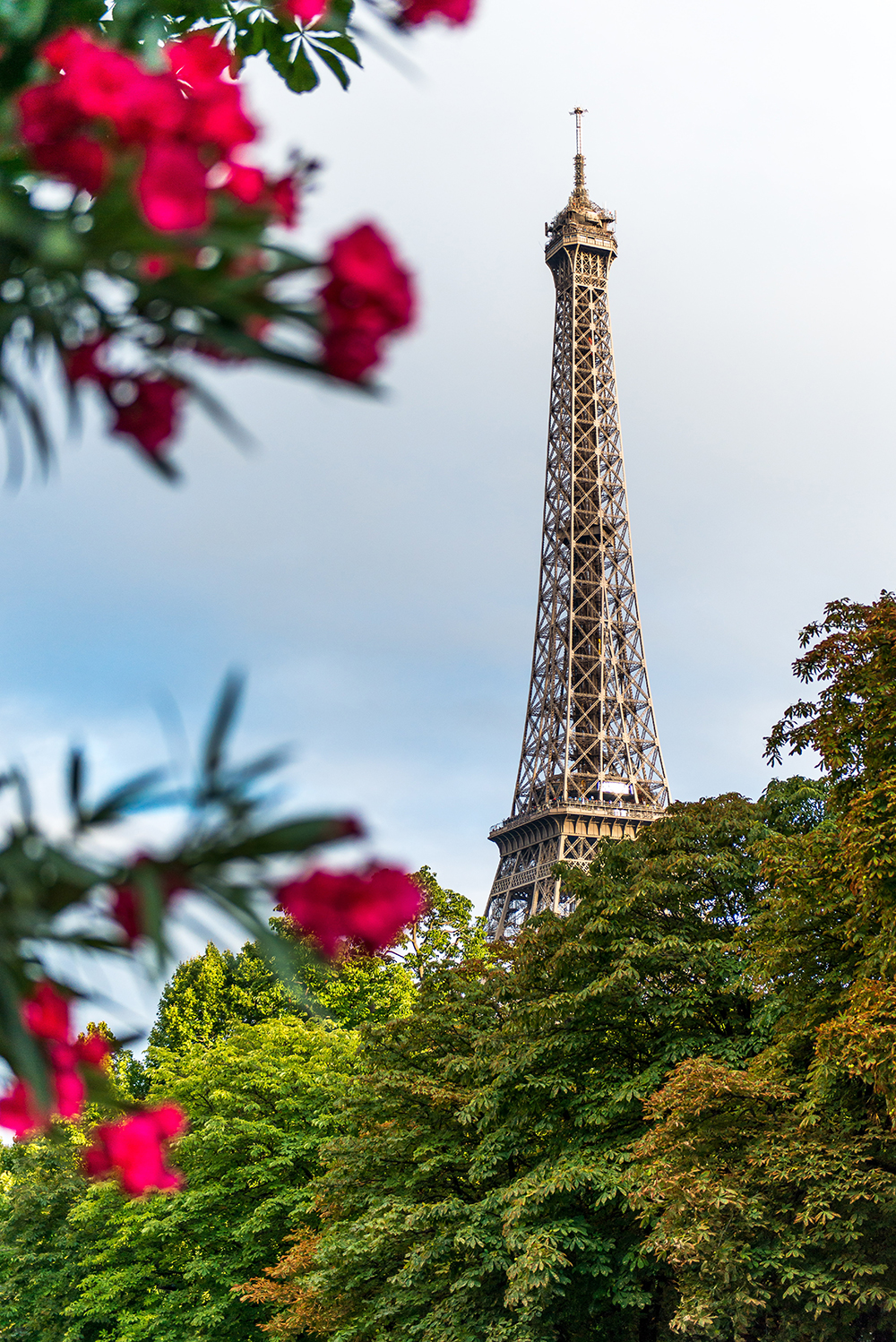
1. Eiffel Tower
I think you should see the Eiffel Tower by day and by night. You only need to go to the top once, though.
You can also stay in a hotel near the tower; it’s a lovely neighborhood.
2. Louvre Museum
Don’t even consider waiting in the ticket line. Buy your ticket in advance or online because the lines can be very long.
Seeing the entire museum takes a lot of time, so choose the galleries you’re most interested in beforehand. The Iranian collection was in Hall 20 when I visited.
Be sure to see the Louvre from the outside at night, too. The atmosphere is wonderful.
3. Notre-Dame Cathedral, Saint-Germain, and nearby sights
If you’re interested, you can visit these places together.
4. Montmartre
This is one of the most charming parts of Paris, with a famous church on the hilltop. You should definitely visit, or even choose a hotel in the neighborhood.
5. Disneyland
If you’re planning to visit Disneyland, buy tickets at least two days in advance. In peak season, you may need to book a week ahead; otherwise, tickets might sell out.
6. The Opera
The opera house area was another place I really loved. Be sure to look into it.
7. Museums
If you enjoy museums, Paris has plenty. Besides the Louvre, you can visit many others.
And much more…
I would have recommended installing Google Trips: it suggested places to visit and could even organize your entire day.
Wandering through Paris’s little streets is delightful, although I would avoid doing so late at night in quieter areas. Try to walk a lot while you’re there.
For choosing restaurants, I liked Foursquare, though TripAdvisor and Yelp can help too.
From Paris to Brussels
Since Brussels was on the way to Amsterdam, I decided to stop there. It’s an attractive city with a beautiful central square surrounded by striking buildings, definitely worth spending a few hours in. But I don’t think you necessarily need to stay overnight.
You could skip booking a hotel, take your suitcase with you on the metro, visit the square, take some photographs, and return to the station for your next train.
But if you have luggage and want to explore the side streets at a relaxed pace, stay at a hotel near the metro for one night.
I’ll emphasize it again: being near a metro station makes everything easier.
There were inexpensive 24-hour metro tickets available, which you could buy at the station with either cash or a card.
If you have a credit card, you can book train tickets online through GoEuro, use Iranian websites, or buy directly at the station. I wouldn’t recommend buying at the station, because seats might be sold out or tickets may cost more.
In general, having a payment card makes this type of trip much easier. Various companies in Iran also offer international payment card services.
People in Brussels speak French and Dutch, and some speak German; I found their English much better than that of many people I met in France. I didn’t spend much time there or interact with many locals, but my overall impression was that they were similar to the French.
Amsterdam
Amsterdam was the highlight of this trip: the most interesting city I’d seen up to that point, full of sights, visitors, and fascinating places.
Traveling from Brussels to Amsterdam was easy, taking about two to three hours by train.
The rail journey was incredibly beautiful, with windmills and green fields as far as the eye could see.
Amsterdam’s main railway station and metro connections are right next to each other, just a few minutes’ walk apart. For tickets, use the self-service machines and consider a 24-hour, 48-hour, or longer pass.
Two days in Amsterdam felt far too short. I think you should spend at least four days exploring this lovely city.
Here are some of the things I wouldn’t miss:
1. ARTIS Zoo
It was one of the most fascinating urban wildlife collections I’d ever visited. The animals and the beautiful setting amazed me.
2. A canal boat tour
This was perhaps the best part of my trip. The boat captain shared really interesting stories about the city’s sights, history, and culture.
The boats departed right in central Amsterdam, near the main railway station where I arrived.
3. The Red Light District
This neighborhood is full of lively restaurants and cafés and attracts many tourists. Some people wander the streets after taking drugs. There’s also a small, noisy amusement area nearby.
4. Amsterdam’s museums and churches
There are so many that you’ll need to choose according to your interests.
5. Windmills
Walking through Amsterdam’s streets is a joy. Try to explore as much as possible on foot. I’d recommend taking a boat tour first, because it gives you an overview of the city and helps you decide which places to revisit in the following days.
Cannabis use is tolerated in some coffee shops, so don’t go into just any café if the smell bothers you.
You may wonder how drug use can be legal in Amsterdam. A Dutch person explained it to me this way:
“In Amsterdam, just like everywhere else, it isn’t completely legal. The police and government simply don’t enforce the rules in the same way.
Many Dutch people wonder why alcohol, which can contribute to crime and violence, is legal in so many countries while marijuana, which they consider less harmful, is prohibited.”
I felt less safe walking alone in quiet parts of the city at night, so I preferred not to do so after 9 p.m. Busy areas seemed safe, but if your hotel is far from public transport, you might prefer a taxi.
Free Wi-Fi was available in many places throughout the city.
Dutch people struck me as liberal, frank, friendly, and cheerful. They generally spoke excellent English and seemed less insistent on using their native language than people I met in France.
Overall, I enjoyed spending time and interacting with people in the Netherlands more than in France.
One of the most fascinating things in Amsterdam was the houseboats where people live. I wanted to spend a night in one, so I asked around and discovered they could be rented through Airbnb.
If you go to Amsterdam, I recommend staying in a houseboat for at least one night.
From the Netherlands to Prague
I flew from the Netherlands to Prague. Booking through GoEuro was straightforward, and tickets could be purchased online.
Prague
The Czech Republic uses the Czech koruna. Some places don’t accept euros, while others convert them at an unfavorable rate, so think about exchanging money in advance.
Airport exchange rates generally aren’t very good, and you can find better options in town. Rates vary widely between exchange offices in Prague, so check whether they charge commission.
Some offices charged as much as 20% commission. A sign might show one rate, while you receive a different amount when exchanging your money. When you ask why, they may say the advertised rate applies only to larger transactions.
So always check the final amount before exchanging your money.
At the airport, take a bus. Find the correct route on Google Maps; the airport has internet access. Most passengers from your flight will probably head toward the same bus stop. You can buy a ticket at the machine beside the stop.
The bus takes you to a metro station, and you’ll probably need to take the metro to reach your hotel. You may be able to use the same ticket for the transfer.
Choose a transport pass based on how many days you’re staying; it will make getting around the city much easier.
Prague is one of those cities I wholeheartedly recommend. It’s beautiful and historic, full of lovely cafés, restaurants, and places to see.
If you enjoy museums and historic buildings, don’t hesitate to visit Prague.
I spent two nights there and felt it was enough to see many of the main sights. But if you want to spend more time in Prague’s museums and palaces, you’ll need around four days.
Public transport serves the entire city, and walking is a pleasure. I walked about twenty kilometers a day while I was there.
You can feel the difference between the Czech Republic and other European countries: prices seemed lower, and I noticed a more generous approach to some amenities. I realized this as soon as I checked into a very warm hotel room with breakfast included.
At many three- and four-star hotels elsewhere in Europe, breakfast costs extra, and rooms sometimes feel chilly in colder months. Prague felt different to me: everything was cozy and warm.
Prague has a traditional dish called goulash, a kind of meat stew, and a famous sweet pastry often sold with ice cream. Try them while you’re there.
Walking through Prague’s main square and across its famous bridge is wonderful.
I also recommend visiting Prague Castle. There’s a metal observation tower on a hill overlooking the city, with a fantastic panoramic view. You can take transport up the hill and walk down through the area’s charming streets.
Many metro stations don’t have escalators, so plan ahead if carrying a suitcase up stairs is difficult for you.
Prague seemed safe at night, although I generally prefer not to stay out too late in European cities.
From Prague, I took a bus to Germany and got off in Leipzig.
On trips like this, pay close attention when getting off trains and buses. It’s easy to miss your stop or travel past it. Don’t rely solely on your phone’s GPS. Listen for the driver’s announcements and set reminders, since trains and buses usually run on schedules.
Google Maps also had an option to add journeys to Google Calendar, but it’s best to stay alert yourself.
Germany
My experience in Germany began with missing my stop and getting off in a quiet, seemingly deserted town. That’s exactly why I recommend watching the time and listening for announcements.
At the station where I got off, I had no internet to buy a ticket and had to use the ticket machines. Unfortunately, I didn’t have any euro change, and the machine wouldn’t accept my payment card. The display said the train to Leipzig would leave in ten minutes, with the next one two hours later.
Always keep some small cash on you, including coins and €10 and €20 notes. It’s not always easy to get change, and cards or ticket machines don’t always work.
Eventually, I discovered that one machine was broken and bought a ticket from another one. I made it to the train with just one minute to spare.
That train ride was one of the most unnerving parts of the journey. There were only two passengers in the entire train: me and another man from Asia.
As I approached Leipzig, the GPS once again displayed the wrong location. I figured out I’d arrived by checking the time and station signs.
There was internet at the station. I checked my route and found that a local train could take me close to my hotel. Google Maps even showed me the platform. All I needed was a ticket, but that’s when my struggle with German ticket machines began!
First, the touchscreen barely worked, and many options, such as single and two-day tickets, were unavailable. Nobody seemed able to give me a clear answer in English.
Eventually, a staff member pointed me to another machine. Even after switching its language to English, half the text was still in German!
In my experience, English wasn’t always widely used in Germany. In some restaurants and stores, even well-known chains, I could barely find any English information. Keep Google Translate handy. Its camera translation feature is particularly useful: point your phone at a sign and read the translation. If you won’t always have internet, download German for offline use.
At last, after a lot of trouble, I paid a single euro for my ticket and got off at a station near the hotel.
By then it was nighttime. The open-air station was quiet and rather intimidating. Worst of all, I had to climb about fifty steps to get out!
After about 9 p.m., the town seemed to shut down, and I didn’t feel comfortable going out.
Leipzig is a university city with a long history, so there are plenty of churches and historic places to visit. It also has beautiful wooded parks and riverside areas worth seeing.
In many parts of Germany, train and metro tickets aren’t checked by automatic gates. Instead, inspectors may board and check tickets with handheld devices, although the system varies between cities. I was impressed by how advanced and quiet the trains were. Some local trains even had toilets and spaces for bicycles.
My plan had been to go from Leipzig to Berlin and then to Munich. But I changed it because I was exhausted. I decided to spend the last four days in Munich instead, so I bought a train ticket, changed my hotel reservation, and set off.
The journey between Leipzig and Munich was heavenly. Everything was green, with splashes of yellow and orange in places. Beautiful rivers reflected the houses of small villages, creating breathtaking scenery.
I really wished the train would stop so I could photograph those views, but of course it didn’t.
One thing I noticed more in Germany than elsewhere was the extraordinarily loud sound of fire-engine sirens and church bells. The bells could ring so loudly and for so long that it became irritating. If a fire engine drove past, I practically had to cover my ears.
Germans seemed to follow traffic rules more strictly than the French and Dutch people I’d encountered. In France, drivers were often very considerate toward pedestrians, while pedestrians didn’t always obey the traffic lights. In Germany, I felt that if the light was green for cars, pedestrians were expected to wait and vehicles would continue. Of course, this was just my personal impression, not something that applies to everyone.
Unlike the courtesy I experienced from many drivers in France, crossing against a red light in Germany could earn you angry horns from drivers.
Overall, Munich is an interesting city with a great mix of people and cultures. I wouldn’t necessarily say it is more advanced than other European cities, but it certainly has the feel of a bustling metropolis.
Some streets have many Arab and Afghan immigrant businesses, including barbershops, restaurants, and affordable clothing stores. Other parts of the city are very tourist-oriented, full of churches and historic monuments.
Munich also has a lovely river with ducks and waterbirds, where people come to sit and enjoy the surroundings.
Germans seem to love beer and football. I saw beer-serving establishments everywhere and televisions showing football in many cafés.
I found it interesting that Hitler is widely regarded with revulsion in Germany. Many people strongly condemn him because of the terrible suffering he caused. Those few who sympathize with his ideology are often reluctant to express that openly.
Although I felt that traces of prejudice still existed among some individuals, my overall impression was that many Germans are conscious of their country’s history and see welcoming immigrants and tourists as one way to build a better future.