Cart 0
No products in the cart.

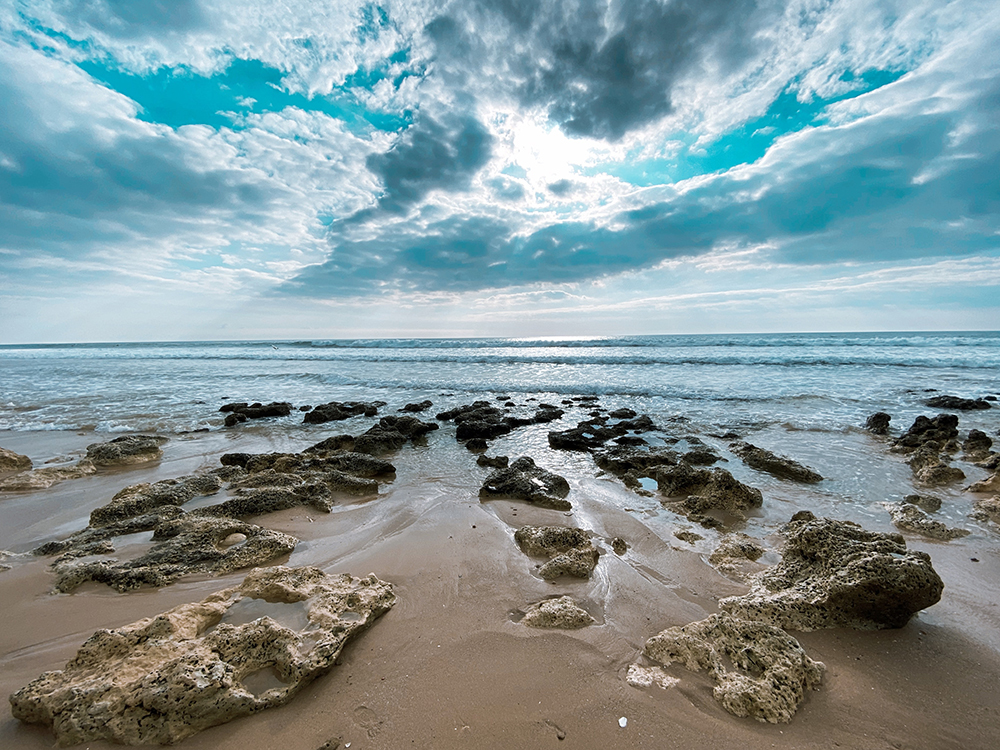
Kamyar had gone to Lisbon for a conference and asked me to join him on a trip to southern Portugal and for some photography. I was more than happy to go. This was the first time I had to travel without my camera. Because of a herniated disc in my back, my doctor had told me not to lift anything heavier than 5 kilos. Still, taking photos with my phone wasn’t bad either.
Kamyar had arrived in Lisbon two days earlier. When I got there, it was getting dark. I was only staying in Lisbon that night, and early the next morning we were going to rent a car and head south. So I settled into a hostel near the metro in the city center.
I walked around the old part of Lisbon for a few hours, but since it was already dark, I couldn’t really see the real Lisbon. Since I was also staying in Lisbon on the last day of the trip, I would have enough time to see the city during the day.
The hostel I was staying in was very clean and lovely. Its only problems were that it didn’t have air conditioning and there were some very friendly mosquitoes.
Early in the morning, after breakfast, I went to the airport. Kamyar and I had arranged to meet in front of the car rental desk at the airport. We picked up the car and excitedly headed south.
A huge suspension bridge over the Tagus River connected the two sides of Lisbon. Both sides of the road from Lisbon toward the south were covered with pine and eucalyptus trees, and their scent could be smelled all along the way. Every now and then, a flock of sheep or a deep-blue lake made the scenery even more beautiful.
After three hours of nonstop driving, we reached the Algarve region in southern Portugal, a coastal region along the North Atlantic Ocean. The hotel Kamyar had chosen for our first night was in a town called Carvoeiro.
The hotel’s traditional Portuguese design and its surroundings immediately attracted us, but when we went down to the beach to see the ocean, we came across something I had never seen in my life: a huge rock formation shaped like an arch, large enough for a passenger ship to pass through.
Since we didn’t have our camera with us, we took a few pictures with our phones and then left to have lunch in town.
When we came back from the town, our rooms were ready. We put our things inside and headed toward the beach for photography.
Kamyar changed the route and started climbing up a difficult path. He explained that we were going to photograph a rock formation shaped like an elephant, so we could take pictures of it at sunset.
When we got there, the horizon had turned pink and the sun was beginning to set. We got ready to take pictures. We stayed there for about an hour after sunset and then returned to the hotel.
It had been a hard day. Driving, a long walk, and photography had left us with almost no energy, so it didn’t take long between having dinner and falling asleep.
Early the next morning, before sunrise, I woke up. I remembered the incredible view of the rock by the beach, quickly got ready, and made my way there.
The air was cool and smelled fresh. Hundreds of birds were sitting on the rocks, occasionally flying from one place to another. On the other side, the sun was rising from behind the sea. The sky had turned completely red, and the reflection of the sun was moving across the water.
It was an incredible scene. The sunrise emerging from the water looked incredibly beautiful and had completely captivated me.
When I returned to the room, Kamyar had just woken up. We got ready for breakfast and decided to spend the morning until noon resting by the beach or somewhere around the hotel, and then, after checking out, head to the next city.
The city of Lagos was about 40 minutes from the hotel. At first glance, it seemed like a quiet and completely touristy city. The houses were mostly empty and many of them were luxurious villas. But when we moved a little farther from the hotel toward the city, the architecture of the houses and the small streets began to change.
Narrow streets and houses with colorful flowers hanging from their windows caught our attention.
A little farther away, next to the beach, there was a staircase with more than 200 wooden steps. To reach the rocky beach, we had no choice but to go down those stairs. Going down wasn’t worrying, of course. It was the thought of coming back up that was on my mind.
We decided to have lunch and come back in the afternoon for photography. After asking around a little, we found out that there were two ways to reach these beaches:
1- By the stairs
2- By boats that came to these beaches from the other side.
There were more than 10 different beaches in this city, with rock formations in all kinds of shapes, and each one had its own unique name.
After lunch, we visited several rock formations until sunset, and Kamyar chose a suitable location for night photography.
Of course, we didn’t go down any of the staircases because we weren’t planning to go to the beach.
We returned to the hotel and rested for a while so we could get ready for the night photography.
We walked almost one kilometer to reach the right spot. The moonlight, calm water, and rocks had created an incredible combination. We spent about an hour taking pictures and then returned to the hotel.
The next day, after having breakfast at a local café, we decided to see the rocky beaches by boat. So we went to the pier and signed up for a boat tour.
All the rock formations we had looked at from above, we were now seeing from below and from inside the water. Some of the rocks looked like caves, and the boat driver skillfully took the boat inside them and then back out again.
Since it was our last day and the next day we would be on the road from morning until night, we decided to spend the rest of the day relaxing by the beach.
Early the next morning, we left the hotel and returned to Lisbon. We went straight to the airport and returned the car.
Kamyar flew back, and I stayed in Lisbon for one more night. It was almost noon when I arrived at the hotel. The hotel was near the city center, so I visited all the main sights of the city on foot.
What caught my attention most in Lisbon was the structure of the old city, which had remained untouched since the Renaissance.
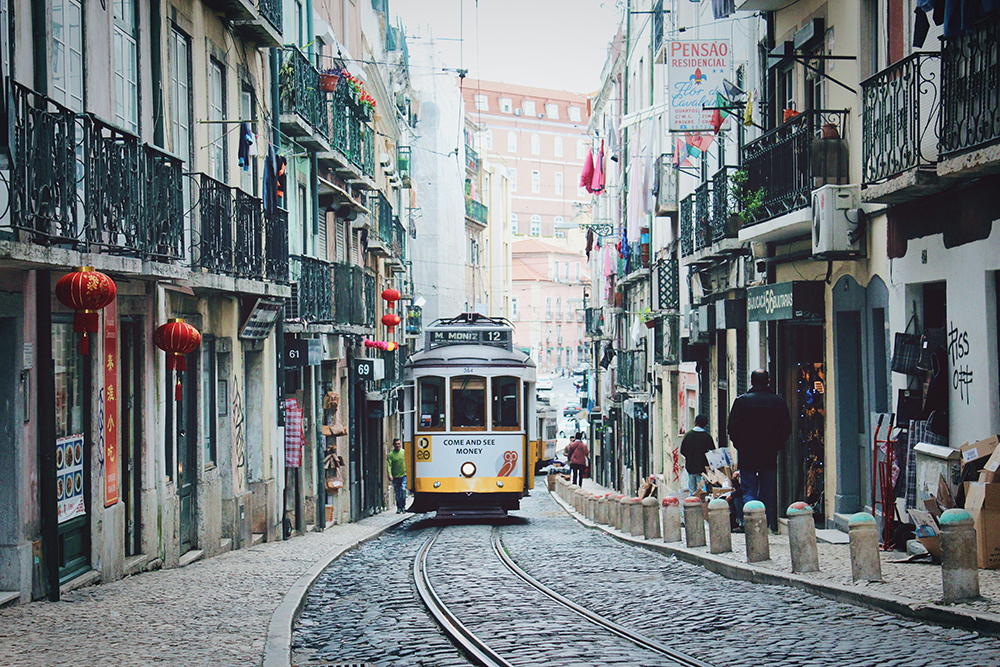
Lisbon is a city of hills and slopes, and parts of it are built on hills. There were very old trams running through the narrow streets of the old city, carrying people up the steep hills.
The trams were about the size of a minibus and basically just went up and down the narrow streets.
I walked around the old city until nightfall, watched the sunset by the waterfront, and then returned to the hotel.
The next day, I went out to explore the city again. I found neighborhoods where almost every wall was covered with all kinds of paintings, and in a way, they had become destinations for photographers and tourists.
Lisbon is also famous for its pastry shops. They have a particular pastry called Pastel de Belém (Custard Tart), which is extremely famous, and locals have a habit of having it every day with tea or wine.
I took some photographs and left the hotel for the airport before noon.
Adding {{itemName}} to cart
Added {{itemName}} to cart