Cart 0
No products in the cart.
Our trip to Italy started in Rome, the capital of Italy, the birthplace of the Vatican, and the headquarters of Catholics around the world, with a history of more than 3,000 years and a rich culture of art and architecture. It was the starting point of the early Roman Empire and the home of the Colosseum, which witnessed numerous gladiator battles and, after 2,000 years, is still standing strong and solid.
Vatican City, located in the center of Rome, is considered the smallest country in the world—a small country within the city of Rome, because of the special position of the Pope and the headquarters of the Church.
Vatican City even has its own flag and postage stamps, and in many matters it does not follow Italian laws.
Before getting into the details of the trip, I’ll mention a few interesting things about Italy that made this country different from the other European countries I had seen up to that point:
Italian people are, by far, warmer and more friendly than people in other European countries, especially Northern Europe. Italians look very similar to us Iranians and Turks, and culturally, you can also find many similarities between us.
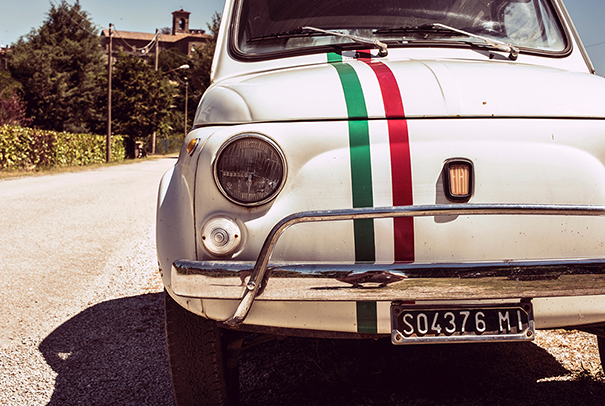
I had heard about the way Italians drive for a long time, but it was quite interesting to see that even in 2019, and after the European countries had united, they still didn’t seem to care that much about traffic laws.
Of course, they are still miles away from us Iranians and are much better drivers than we are. At least they respect pedestrians and don’t use their horns too much.
Italians love pasta, and just as much as we Iranians eat rice, they eat pasta. In Italian restaurants, a meal is divided into four sections: appetizer, main course, second course, and dessert.
Usually, pasta and pizza are served as the main course, while different kinds of meat, chicken, and steak are served as the second course. If you want to order one dish from the main course and one from the second course, make sure you tell them to serve them together, because they might bring them separately, one after the other.
Unlike all the traffic lights I had seen before, pedestrian traffic lights in Italy also have a yellow light. Usually, pedestrian lights are only green and red, or blue and red, and when the color is about to change, they blink for a few seconds.
All over the cities, you can see condom vending machines in front of pharmacies in Italy. These machines can even be found in some villages.
Almost all toilets in Italy, except public toilets, have a “bidet,” which basically does the same job as a handheld bidet hose. In all houses and hotels, without exception, you can find this washing device.
We stayed for two days in a guesthouse near Vatican City and then headed toward Sorrento, a very beautiful coastal city south of Rome. The purpose of going there was to see the ancient city of Pompeii and visit the beautiful city of Sorrento.
For this trip and the itinerary we had planned, we had already contacted a car rental company, and we were supposed to pick up the car at Rome’s central train station on the morning of the third day. After leaving the guesthouse, we went to the train station. The rental car representative checked our documents and realized that my international driver’s license had expired. Using Kamyar’s license wasn’t possible either, because the credit card was in my name, and the primary driver and the credit card holder had to be the same person.
The problem was that we had already booked all our hotels, and a 10-day trip without a car was basically impossible, because most of the hotels were outside the cities and far from public transportation.
There were several other car rental companies at the train station, so we started asking around until finally one of them, a company that wasn’t particularly well-known, agreed to provide a car to Kamyar using my credit card, for an additional 20% fee.
We were so stressed that we didn’t say a word to each other for an hour. We picked up the car and headed toward Pompeii.
Pompeii is a very old city with a villa-style structure and ancient architecture that was built by the Greeks before Christ. Next to the city is a volcanic mountain that is hundreds of thousands of years old. The city was destroyed by volcanic lava many years ago, and people who were trying to escape the lava were turned into casts. In 1748, the city was discovered beneath a thick layer of ash, and after years of work, the city and its cast-like citizens are now on display for visitors.
After several hours of walking around Pompeii, we headed toward Sorrento. From the moment we entered Sorrento, we were stunned by the beauty of the city and the Mediterranean Sea, which was churning beneath the city’s high cliffs. We stayed one night in Sorrento and left for Tuscany the next morning.
Tuscany is the name of a large region in central Italy, and the capital of the region is Florence (similar to a province and its capital). This region is unique in terms of its nature and vegetation, and the cypress trees give it a very special look. Vineyards can be seen all over the region, and there are more small and large wineries here than supermarkets. Every year, many tourists travel to this region to see its untouched nature, taste wine, and visit its historic cities and experience its architecture, painting, and sculpture.
We stayed in Tuscany in a country house near the town of Pienza, which is also known as the city of cheese.
The breathtaking view of the green fields and cypress trees around the area can take anyone’s breath away. During our two nights in the region, we spent our time taking photographs and visiting the old town of Pienza. I’d rather not add any more explanations and let the pictures tell the story of this beauty.
After Pienza, we headed toward the town of San Gimignano. The town was about an hour from Florence and is considered one of the oldest towns in Tuscany. The area around the town is full of vineyards, and because the town is located at a higher elevation, the view of the vineyards from above is incredibly beautiful. The town is famous for its white wine and cheese.
The next day, we headed toward Florence. While using Waze to find our way into the city, we noticed a message about a traffic restriction (ZTL), which did not allow cars without a permit to enter the old city of Florence. Even though I had made sure the hotel had parking before choosing it, I wasn’t aware of this restriction, so this mistake happened. What’s interesting is that Google Maps doesn’t provide this information.
Before reaching the hotel, we called them, and the hotel representative explained that we had to leave the car in a parking lot outside the restricted area, which ended up costing us quite a lot.
Florence is a historic city famous for its museums and church architecture. Michelangelo’s David and many of Leonardo da Vinci’s works of art are located in the Uffizi Gallery in this city.
The Duomo of the city is enormous and spectacular, and before you even enter the city, it appears among the houses.
The bridges built over the Arno River have made the face of Florence particularly beautiful.
From Florence, we headed toward a place called San Marino. Before getting there, I hadn’t really done any particular research about the area. I had only seen a few pictures and knew that it had a famous castle in the mountains. When we arrived, I was stunned by its beauty. I felt like I was standing on the roof of the world, with everything below me covered in green, mountains that looked incredibly small, and country houses appearing like little orange dots in this endless sea of green.
The hotel Kamyar had booked was inside the castle, and like all the houses inside the castle, it had been built in an old-fashioned style. On the way to the hotel, I noticed different blue flags all over the city. I did a little searching and realized that we were no longer in Italy. San Marino is an independent country, officially called the “Republic of San Marino.” The car license plates, police uniforms, and even the laws are different. This country is the second-smallest country in the world after Vatican City, and if we don’t consider Vatican City a real country and only consider its political and religious circumstances as the reason for its independence, then San Marino is the smallest country and the smallest republic in the world.
I’ve included the photos I took in this area in this travelogue so you can see its beauty for yourselves.
The trip ended with our return to Milan, where I spent one night at Malpensa Airport.